Identify Your Antique Safe's Manufacturer
If you’ve inherited a safe, bought a house with one already bolted to the floor, or found one in an old commercial building, the first question is usually the same one: who made this thing, and how old is it? Being able to identify your antique safe’s manufacturer matters for more than curiosity — it affects what parts and hardware exist for it, how it should be restored, and in some cases what it’s worth. Here’s where to look and what to look for.
Most manufacturers put their name somewhere prominent, but not always where you’d expect. Check the front of the door for a badge, plaque, or painted lettering — this is the most common spot and often survives even on heavily worn safes.
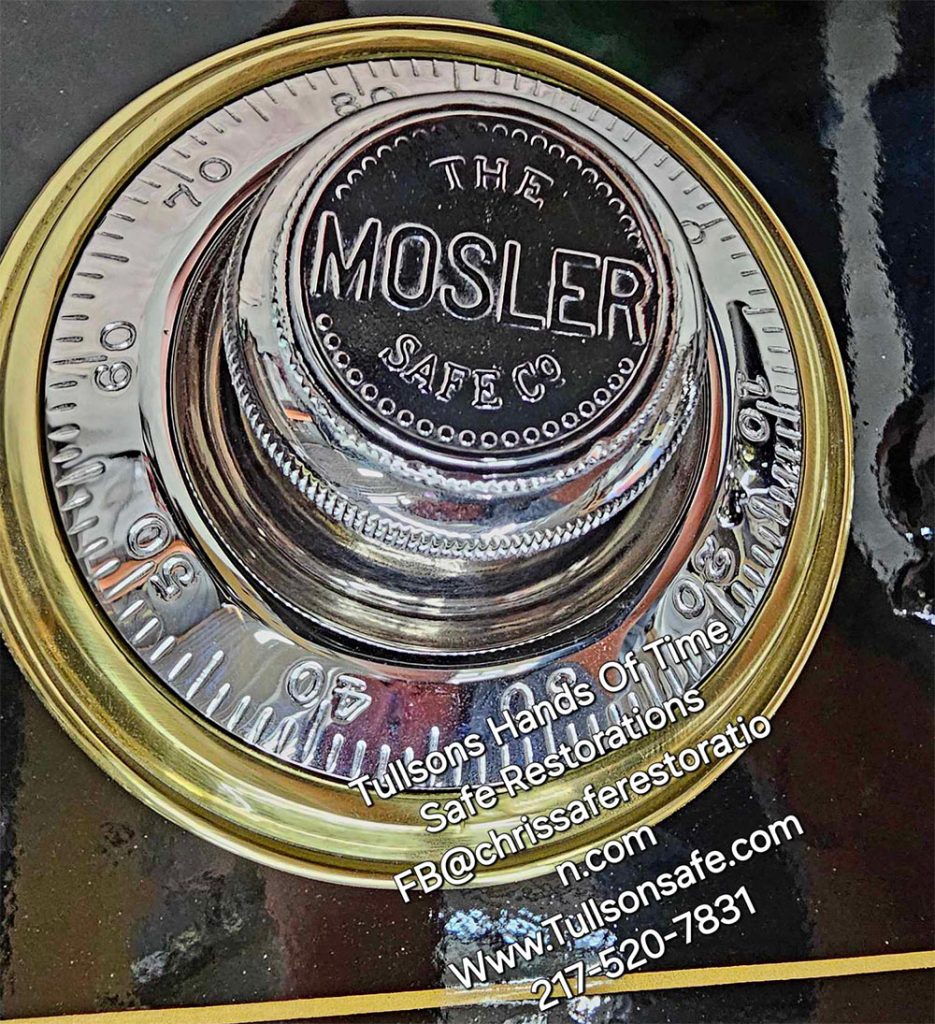
If the door is unmarked or the paint has worn away, check the dial face itself, since many manufacturers stamped or engraved their name directly into the combination dial.
The back plate (visible when the door is open) and the kickplate or base are the next places to check — manufacturers frequently stamped serial numbers and model information in these less-visible spots specifically because they held up better over time than exterior paint.
Older safes sometimes carry only a monogram, a trademark symbol, or a stylized logo rather than spelled-out lettering — J.W. Norris & Co., for example, registered a distinctive circular trademark design in 1874 rather than relying on text alone. If you find a symbol you can’t place, a photo of it is often enough for someone in the trade to identify.
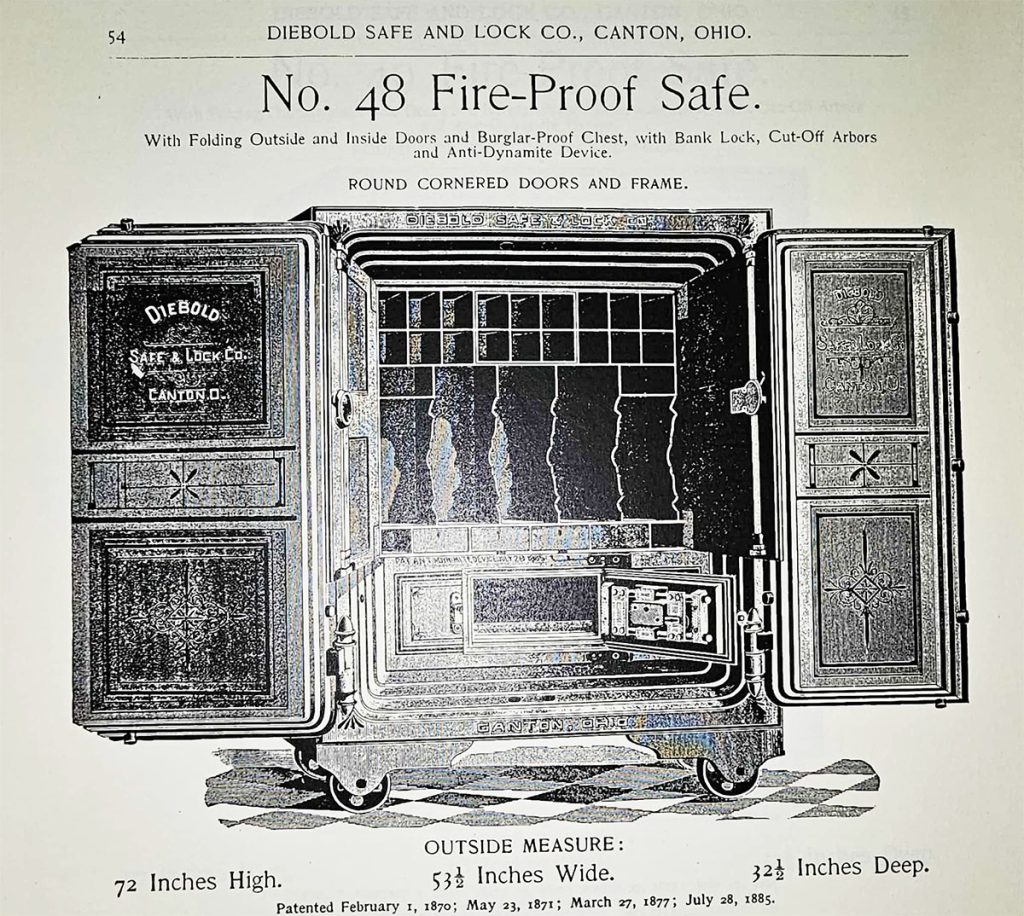
A few manufacturers you’re likely to encounter:
- Mosler Safe Company — based in Hamilton, Ohio, known for bank vault doors (including work at Fort Knox) and the “Cannonball” round-door safe style.
- Diebold Safe & Lock Company — founded in Canton, Ohio, well known for fire-resistant designs that were tested in real disasters like the Great Chicago Fire.
- Herring-Hall-Marvin (HHM) — formed in 1892 from the merger of Hall’s Safe & Lock, Marvin Safe Company, and Herring Safe Company; later absorbed into Diebold.
- National Safe & Lock Co. — based in Cleveland, Ohio, and distributed through dealers like Norris & Co. of Chicago.
This is far from a complete list of every manufacturer that ever built a safe, but it covers a large share of what turns up in homes and old commercial buildings across the country.
If the name is gone entirely, the safe’s construction and finish can still narrow down its age. Ornate hand-painted murals, pinstriping, and gold-leaf lettering point toward the late 1800s through early 1900s, when decorative safes were common status pieces for banks and businesses.
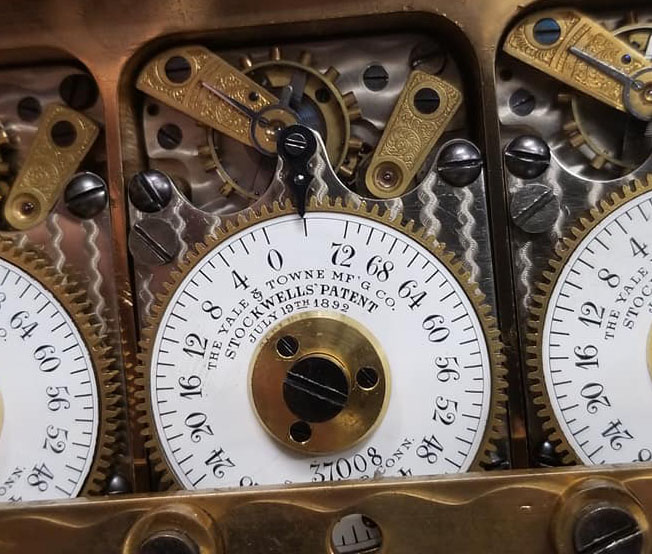
A heavier reliance on plain riveted or bolted iron construction, square-cornered doors, and minimal ornamentation often points earlier. Round “cannonball”-style doors and visible time-lock mechanisms behind the door are typically later 19th- to early 20th-century bank safe features.
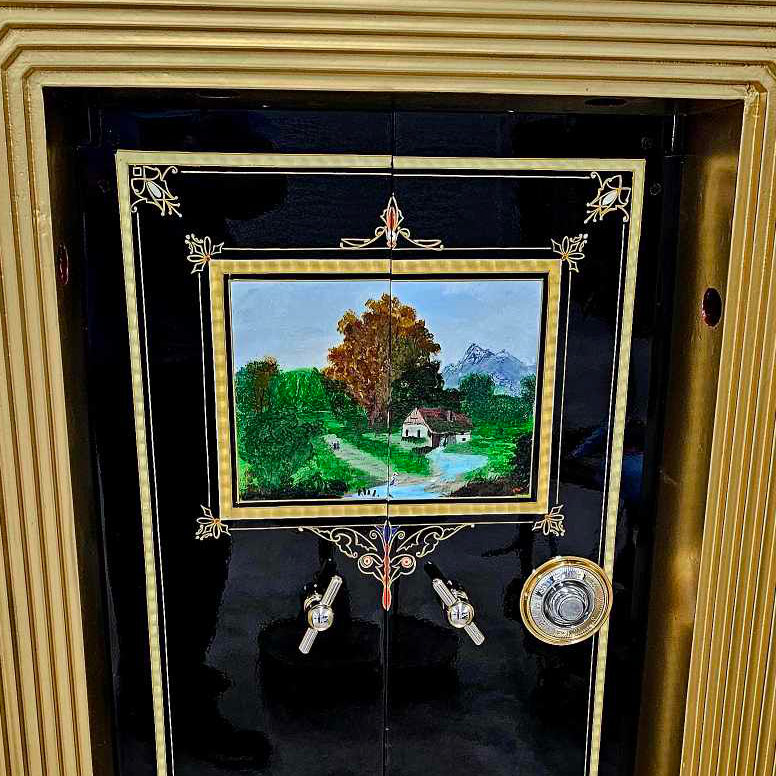
This is genuinely one of the fastest ways to get an answer. A few clear photos of the door, dial face, back plate, and any visible markings usually gives us enough to identify the manufacturer and, often, roughly date the piece. Contact us and we’re happy to take a look, whether or not you’re planning a full restoration.
Frequently Asked Questions
How old is my safe if there's no date on it?
What if there's no nameplate or badge at all?
Does knowing the manufacturer affect restoration cost?
Sometimes. Manufacturer and era affect what original hardware, parts, or documentation exist, which can influence both the approach and the cost. Contact us if you have further questions.