Diebold Safe & Lock Company
History and Restoration
The company relocated to Canton, Ohio in 1872 specifically to keep up with the flood of post-fire orders, and its reputation for handling the extraordinary only grew from there. In 1874, Wells Fargo commissioned Diebold to build what was, at the time, the largest vault in the world for its San Francisco branch — a structure so massive it required a special 47-car train to ship.
Two years later, in 1876, the company formally incorporated under Ohio law as the Diebold Safe & Lock Company, the name that would carry it through the next century. We cover the full story of that pivotal fire — and the other manufacturers whose safes survived it — on our Great Chicago Fire and fireproof safe history page.

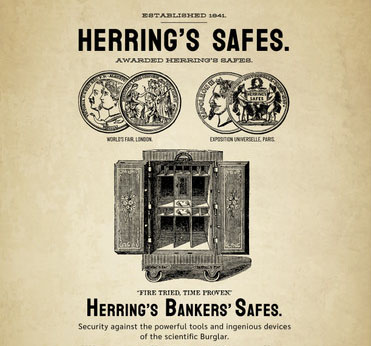
In 1959, Diebold acquired the Herring-Hall-Marvin Safe Company — itself the product of an 1892 merger of three major 19th-century safe makers — bringing that lineage under the Diebold name as well. If you’re working with an HHM piece, our Herring-Hall-Marvin page covers that history in more depth.
Restoring a Diebold Safe Today
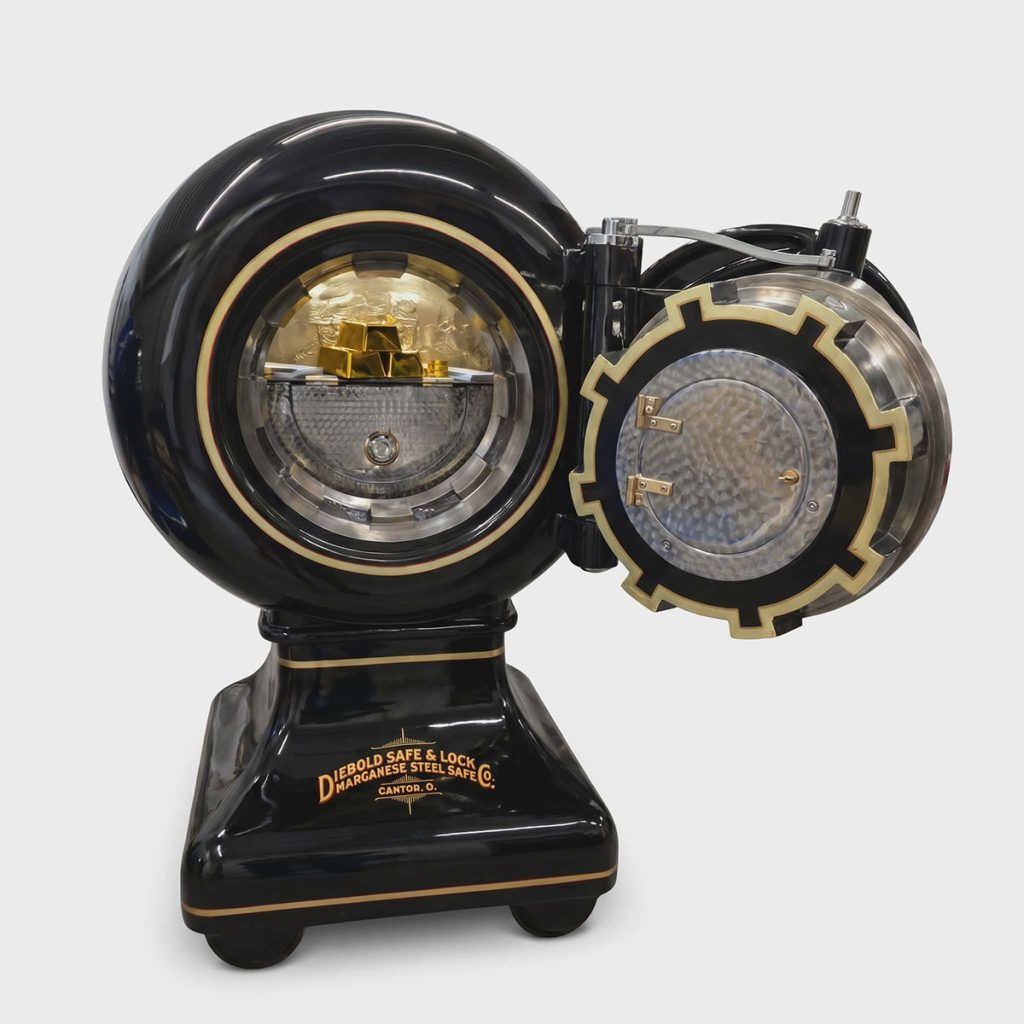
This means working with construction that was, quite literally, engineered and proven against real disaster — multi-layered fireproof insulation, reinforced steel bodies, and often the same ornate hand-painted finishes and gold-leaf lettering common across the era’s top manufacturers. Our restoration process covers what that typically involves from assessment through final reassembly.
If you’re looking to have one restored, please contact us for additional information and next steps!