Safe History with Fire
On October 8, 1871, a fire believed to have started in a barn owned by the O’Leary family swept through Chicago and burned for two days, destroying roughly 17,500 buildings and causing an estimated $200 million in damage — a staggering figure for the era.
The city’s rapid, largely wooden construction gave the fire almost no resistance, and thousands of residents and business owners had no time to save their possessions before the flames reached them. It’s one of the most important events in fireproof safe history, because it turned an entire industry’s marketing claims into a real, citywide test overnight.
Companies including Herring and Diebold had been advertising fireproof construction for years, but the Chicago fire was hot enough to melt iron and glass — a genuine worst-case scenario. When the ruins were searched afterward, a striking number of safes were found intact, their contents undamaged despite everything around them having burned.
For Diebold specifically, the result was dramatic and well documented: all 878 of the company’s safes known to be in the fire’s path reportedly survived with their contents protected, a fact that fueled a surge in demand and helped push Diebold to relocate and expand its Ohio operations the following year. We cover that company’s broader history on our Diebold safe restoration page.

The company’s patented design used layered fireproof materials — plaster and cement among them — to insulate the interior against extreme heat, and multiple Herring safes recovered from Chicago’s ruins were found with contents fully intact after being buried in rubble for days. That reputation carried Herring’s name into the 1892 merger that eventually formed Herring-Hall-Marvin, covered on our HHM history page.
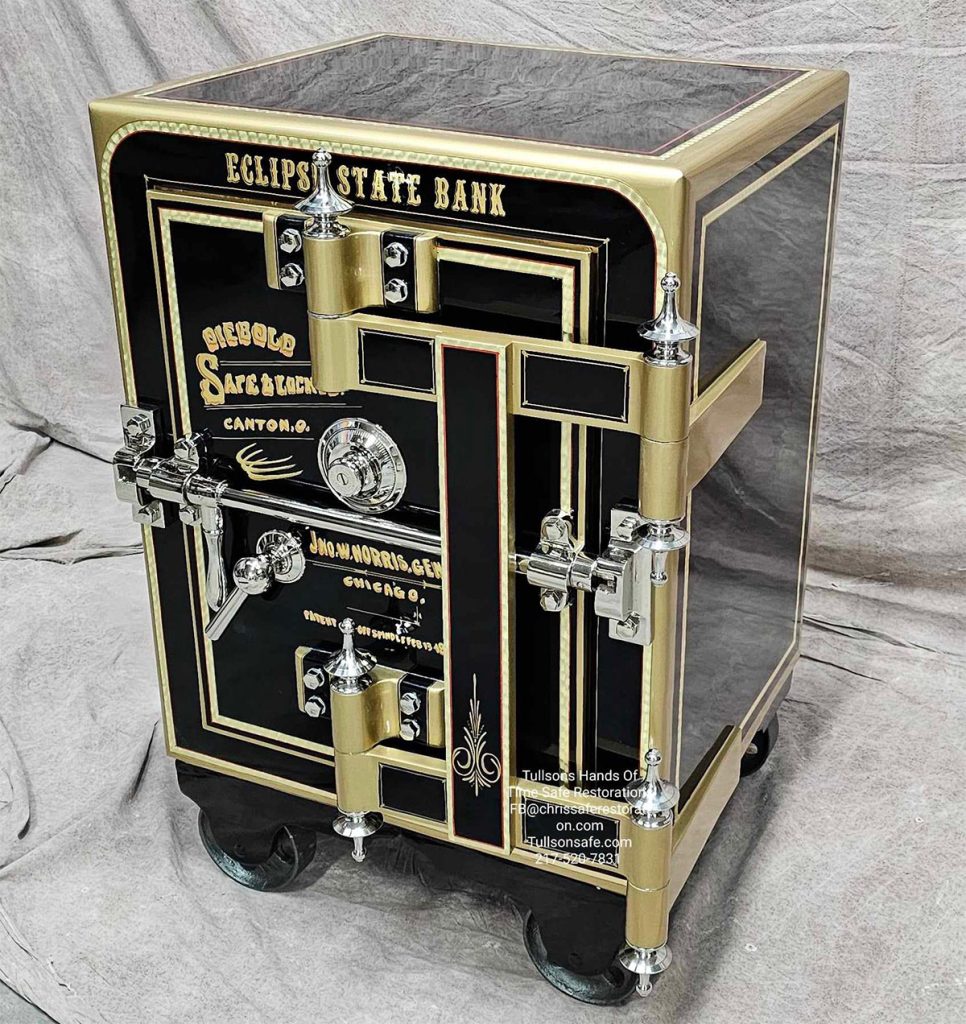
It pushed manufacturers toward standardized testing and certification for fire resistance rather than relying purely on marketing claims, and it accelerated design innovations including multi-layered insulation, airtight seals to limit internal combustion, and reinforced steel exteriors built to survive structural collapse, not just heat.
Modern fireproof safes — with ceramic composites and intumescent seals that expand under heat — are direct descendants of lessons learned in the aftermath of 1871.
A safe that came through the Great Chicago Fire, or was built using the design lessons it produced, carries a documented story most furniture or equipment simply doesn’t have. If you believe your safe has ties to this era, contact us and we can help confirm what you have, and our restoration process explains how we’d bring it back.