Professional Safe Cracking Services
Overcoming Lost Combinations & Jammed Locks
“Safe cracking” sounds like something out of a heist movie, but in practice, most of the calls we get are far more ordinary: a family inherits a safe with no combination on record, a business moves into a building with an old safe already bolted to the floor, or a dial that’s opened smoothly for decades suddenly seizes up. Our safe cracking service exists for exactly these situations — getting a safe open without destroying it in the process.
Dust, dirt, and grease work their way into the tumbler system over years of use, and dried or hardened old grease can bring a previously smooth-turning dial to a complete stop.
Combine that with a lost or never-recorded combination, and what should be a simple task turns into a real problem — especially with antique safes, where forcing the issue risks permanently damaging mechanisms and finishes that can’t be replaced.

Manipulation — carefully working the dial to feel out the combination — is the least invasive option and the one we always prefer when a safe’s condition and lock type make it feasible. Precision drilling, targeted at a specific point in the lock, is a more measured fallback that a skilled technician can often repair afterward.
Destructive entry — cutting, forcing, or otherwise breaking into the safe — is a last resort we reserve for situations where nothing else is realistic, and even then we work to preserve as much of the original piece as possible.
A general locksmith may default to drilling or force because that’s what gets a modern safe open quickly.
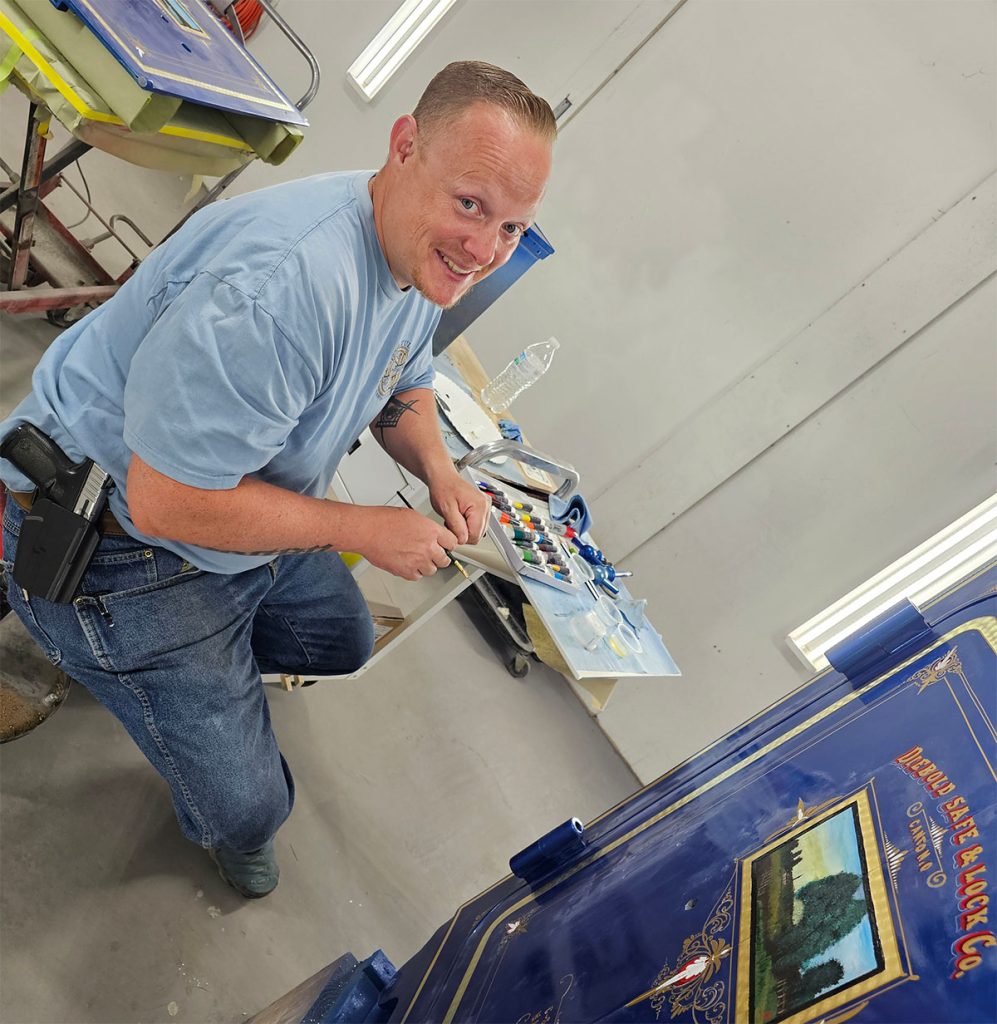
Our approach starts from the assumption that the safe itself has value worth preserving — historically, materially, or sentimentally — and we choose the least invasive method that will actually work, the same philosophy that shapes our full restoration process.
We’ll ask about the safe’s manufacturer or maker’s mark if visible (our manufacturer identification guide can help you find it), how long it’s been inaccessible, and whether the lock is a combination dial, key lock, or electronic keypad. From there we can usually tell you what approach makes sense before we ever see the safe in person.
I inherited a safe with no combination — can you still open it?
Will opening my safe damage it?
What if I just need it moved, not opened?
See our safe and vault relocation services — we handle both separately or together depending on what you need.
Want learn more? Check out these articles below.