Antique Safe Paint Restoration
Working with paint, murals, and gold leaf.
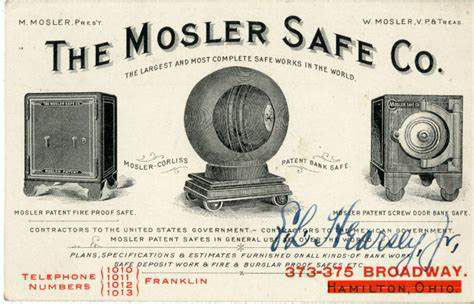
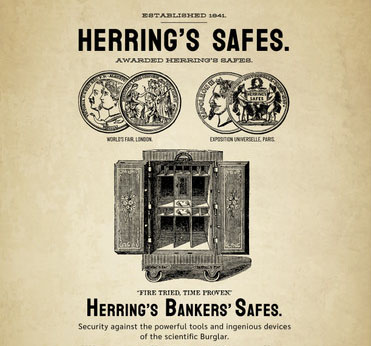
Many people are surprised to learn that a lot of 19th- and early-20th-century safes were never meant to be purely utilitarian. Banks and businesses treated their safes as status symbols as much as security equipment, commissioning hand-painted landscapes, ornate pinstriping, and gold-leaf lettering on doors that also happened to be nearly impossible to break into. Antique safe paint restoration is where that decorative history and functional restoration meet, and it’s genuinely one of the most specialized parts of what we do.
Many antique safes were finished with Japanning — a thick, glossy lacquer coating common in the era — and Japanning distorts and darkens over decades of environmental exposure.
On more than one project, what looked like a yellowish-green finish turned out, after careful paint analysis, to have originally been silver, a very common base color for safes of the period. Getting this right before repainting is the difference between an accurate restoration and a guess.
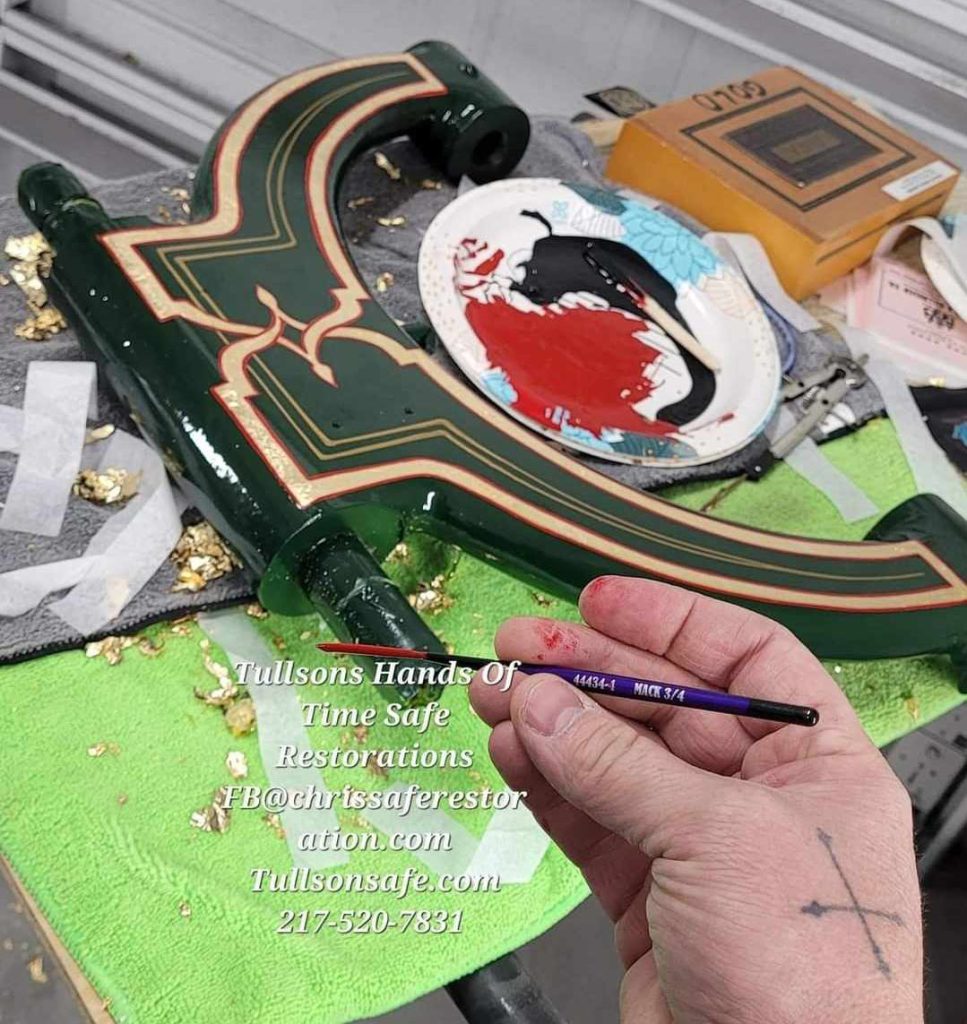
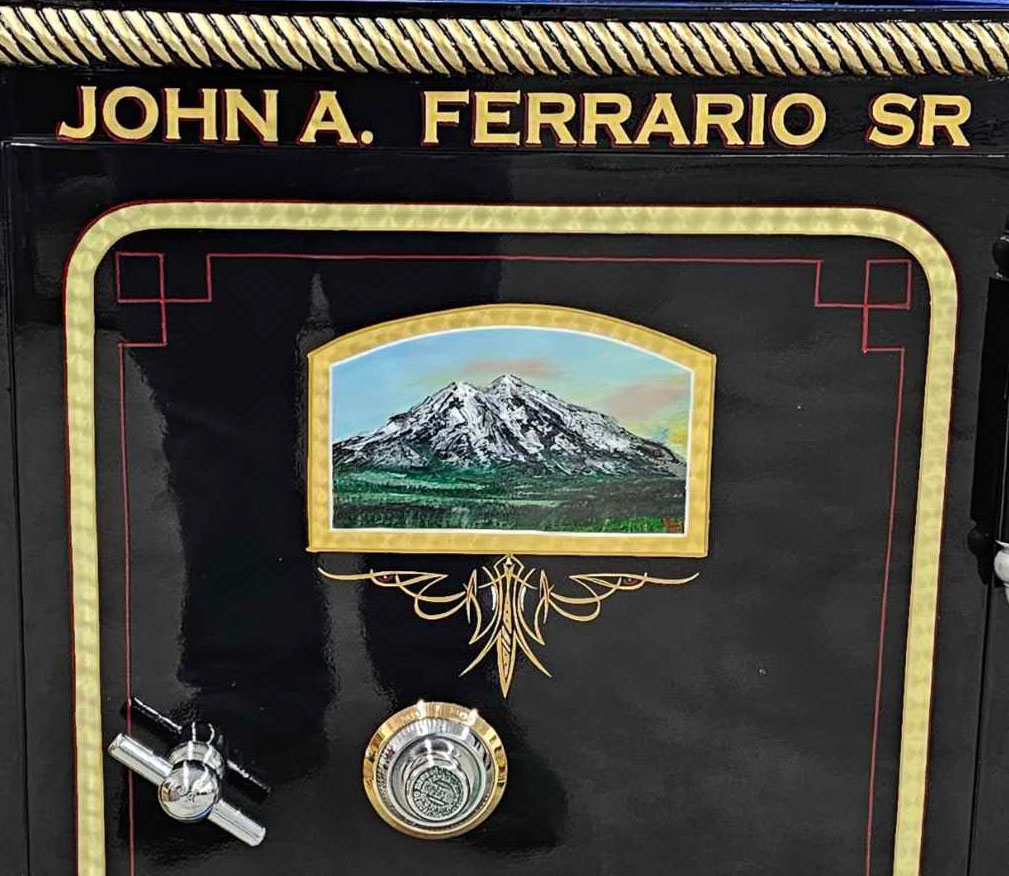
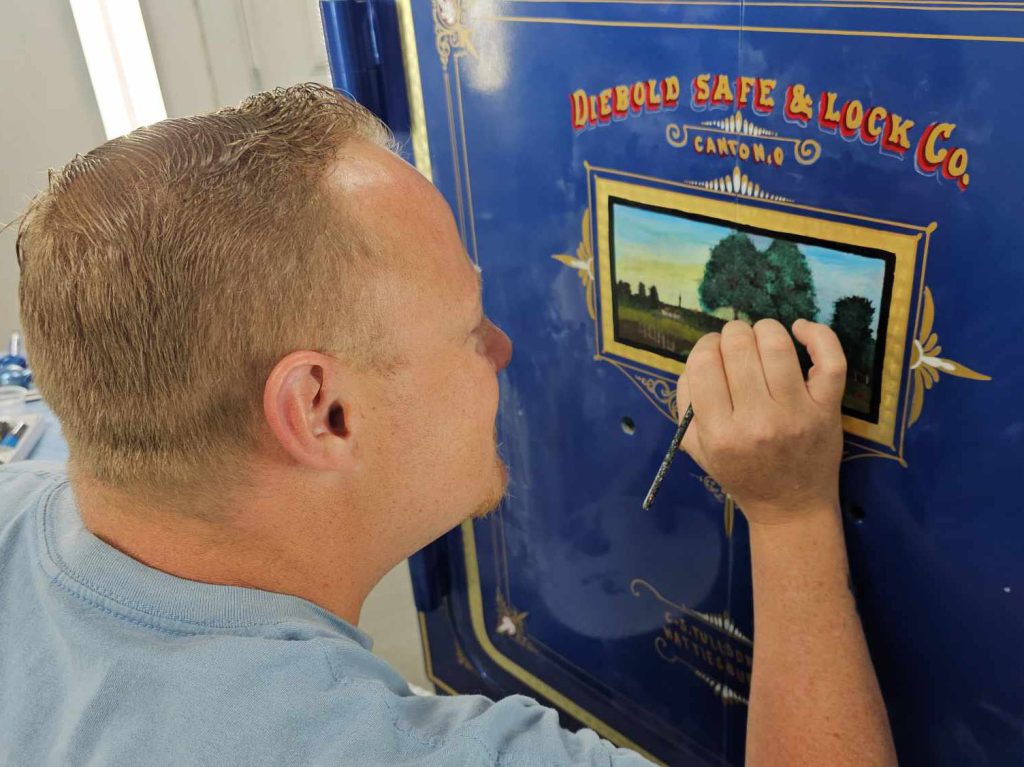
When a safe’s original artwork survives, even partially, we document it thoroughly before any work begins, then rebuild the scene by hand layer by layer — some safes carry two or three separate murals with entirely different scenes on a single door.
Pinstriping follows a similarly exacting standard: the lines have to be measured and spaced with real precision, because even a small misalignment throws off the visual balance of the entire door.
For finishing touches, we apply gold leaf — 18-karat gold on select pieces — and use engine-turning techniques to recreate the fine decorative patterns common on higher-end safes of the era, along with modern, non-yellowing sealers so the finished piece holds its true color for decades rather than repeating the same distortion that happened to the original finish.
A generic paint job might make an old safe look presentable; recreating its original murals, pinstriping, and gold-leaf lettering makes it historically accurate — and it’s usually what turns a functional antique into a genuine collector’s piece.
Our full restoration process page covers how this fits into the broader project timeline.
If you’re not sure whether what you have is technically a vault door, a bank safe, or something else, you can simply contact us directly.