The History of Safes and Vaults
From Ancient Strongboxes to Modern Vaults.
The history of safes and vaults is really a history of two things happening at once: people accumulating things worth protecting, and other people getting better at taking them. Every major advance in safe design, from ancient reinforced chests to today’s biometric vaults, came as a direct response to whatever the current generation of thieves had figured out how to defeat.
The earliest secure storage was little more than reinforced wood.
Ancient civilizations used wooden boxes strengthened with metal fittings and rudimentary sliding locking pins to protect valuables — effective against casual theft, though nothing that would stop a determined attacker.
By the medieval period, wealth had concentrated enough in castles, monasteries, and early merchant houses that dedicated strongrooms and iron treasure chests became common, and European locksmiths began specializing in warded locks that used uniquely shaped keys to defeat simple tampering.

Everything changed with the Industrial Revolution.
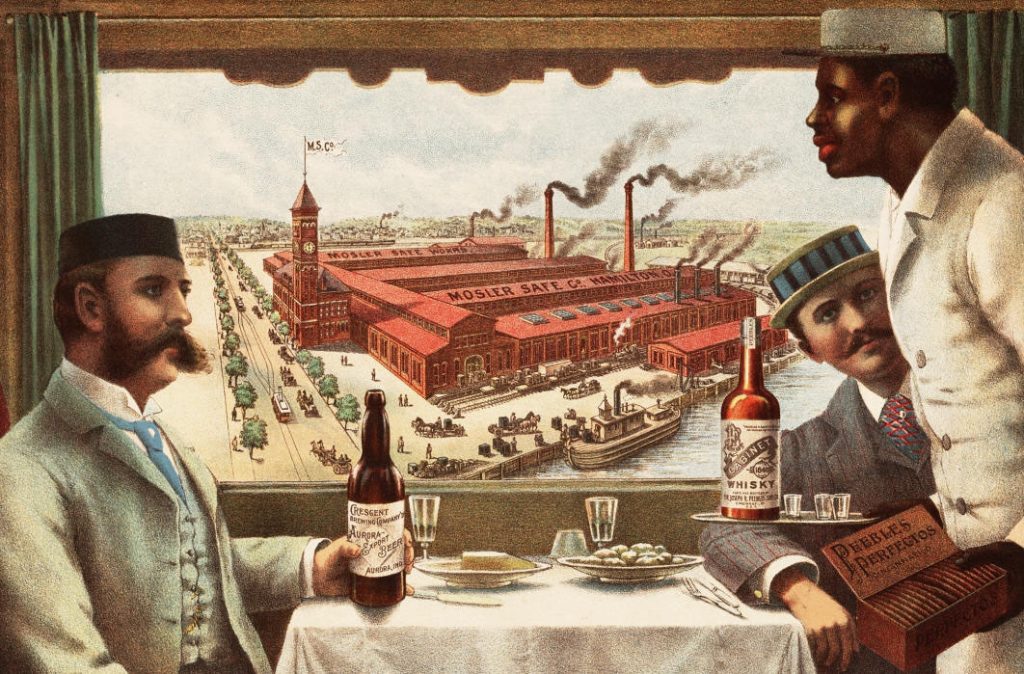
Steel and cast iron became widely available and affordable in the 18th and 19th centuries, and safe manufacturers — Herring, Hall’s, Marvin, and later Mosler and Diebold among them — began producing genuinely fireproof and burglar-resistant designs, often layering fireproof insulation like plaster and cement inside the safe’s walls.
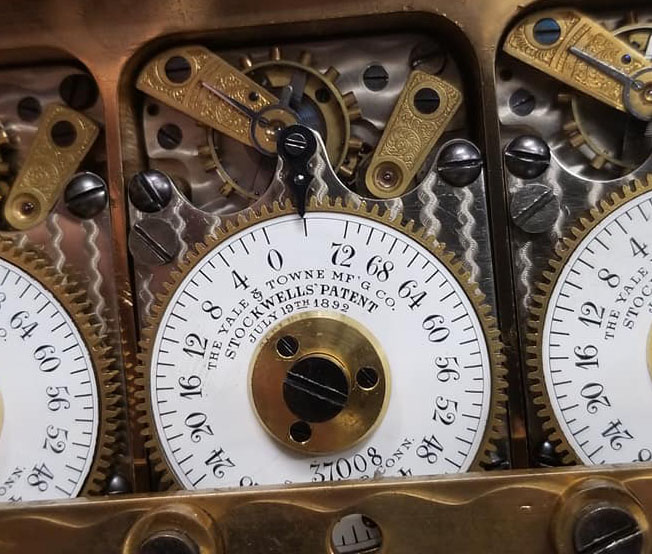
Hall’s Safe & Lock Company introduced one of the era’s most important innovations in 1875: the time lock, a mechanism that kept a vault sealed until a preset time had passed regardless of whether someone had the combination, dramatically reducing the risk of insider theft or after-hours robbery at banks.
As banks spread west with the country’s expansion, they became prime targets for outlaws — the James-Younger Gang chief among them — and manufacturers responded with reinforced steel plating, more sophisticated combination locks, and designs specifically engineered to resist nitroglycerin and dynamite attacks, the era’s tools of choice for safecrackers.
We cover how this played out in one of the most dramatic real-world tests of fireproof design on our Great Chicago Fire page, where safes from manufacturers like Herring and Diebold survived one of the most destructive urban fires in American history.
Alarm systems, solenoid-driven electric locks, and eventually keypads replaced or supplemented traditional dials. Biometric technology — fingerprint and retinal scanning — emerged in the 1990s as a further layer, and today’s smart safes can connect to networks and apps entirely. But the fundamental engineering problem hasn’t changed: how do you build something that keeps the right person in and everyone else out, under whatever pressure the era’s most sophisticated attackers can bring to bear.
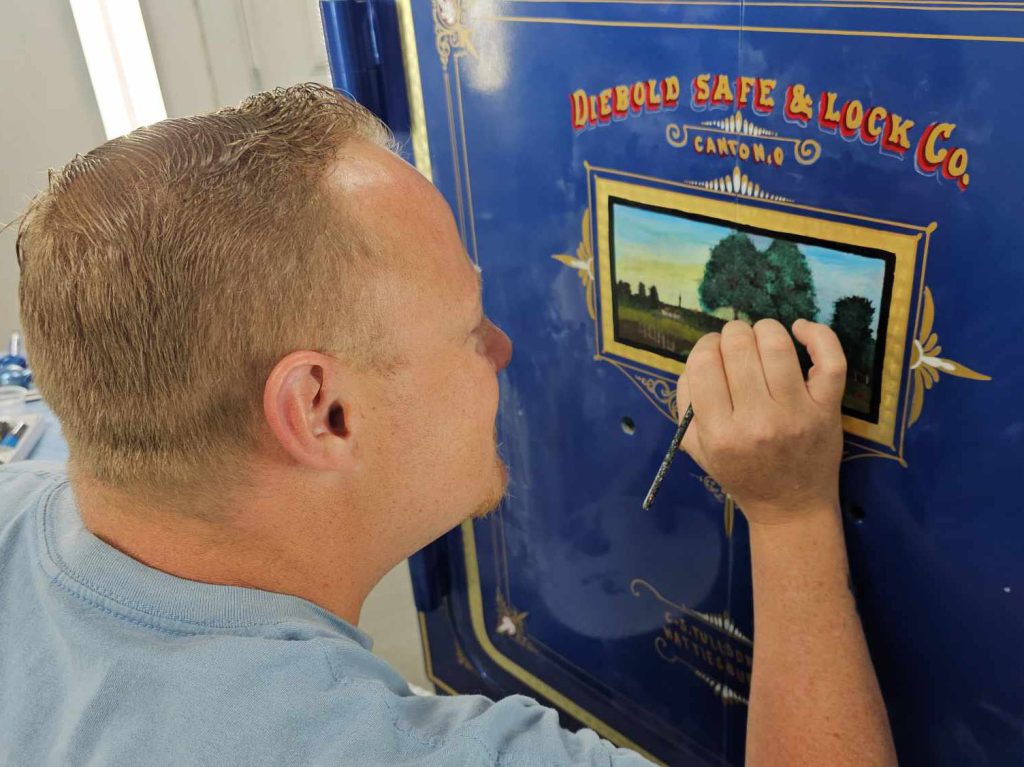
This history is exactly why restoration work matters.
Every antique safe we restore represents a specific moment in that arms race — a particular manufacturer’s answer to the security threats of its era. Understanding that context is part of what informs how we approach identifying a manufacturer and restoring a piece correctly rather than generically.