How Safe Locking Mechanisms Work
The basic anatomy is simpler than it looks.
A locking mechanism patented in 1900 by inventor Henry Deming Hibbard, assigned to the Hibbard-Rodman-Ely Safe Company of New York (U.S. Patent No. 662,435), shows the kind of engineering that went into a quality safe bolt mechanism of the era.
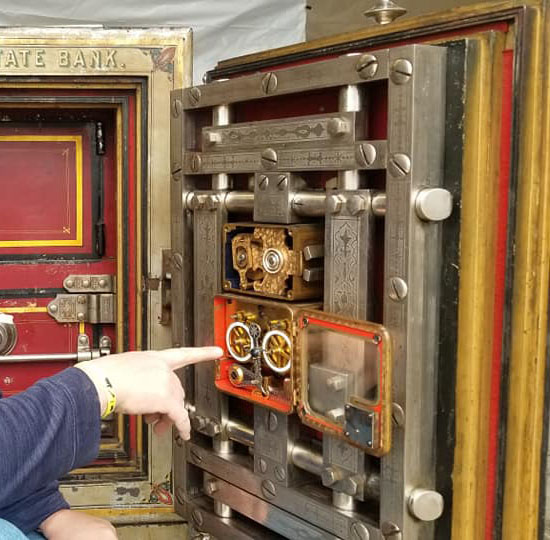
In that design, a rotating actuator plate — shaped like a worm-wheel — connects to the inner end of each bolt through a pin. Turning that actuator swings the bolts both outward and slightly sideways at the same time, a “toggle” motion that lets the bolts wedge tightly against beveled surfaces in the door frame and draw the door firmly shut, rather than just poking straight out.
That same patent shows a second layer of thinking that’s easy to miss: the pins connecting the actuator to the bolts were deliberately made “headless” and easy to shear off under violent force. If someone tried to force the safe open by attacking the actuator mechanism directly, the pins would separate before the bolts themselves moved — meaning the bolts stayed locked in place even while the attacker’s tool destroyed the parts meant to unlock them.
Engineers of this era also positioned the bolt openings specifically to prevent forced liquid explosives from reaching the safe’s structural locking points, venting any breach into a groove instead of the door’s interior. This is the kind of deliberate, almost defensive engineering that defined high-quality safes built during the era of safecracking gangs and nitroglycerin attacks.
Combination locks add a second, independent layer.
In many designs, the dial doesn’t turn the bolts directly — it operates a clutch. Until the correct combination is dialed in, that clutch stays disengaged, so turning the outer handle or crank does nothing at all; the bolt-actuating mechanism simply spins freely without moving anything.
Only when the tumblers inside line up correctly does the clutch engage, connecting the handle to the actual bolt mechanism so it can be operated. This is why a jammed combination lock so often looks like a “broken” safe from the outside — the handle turns, but nothing happens, because the internal connection was never made.
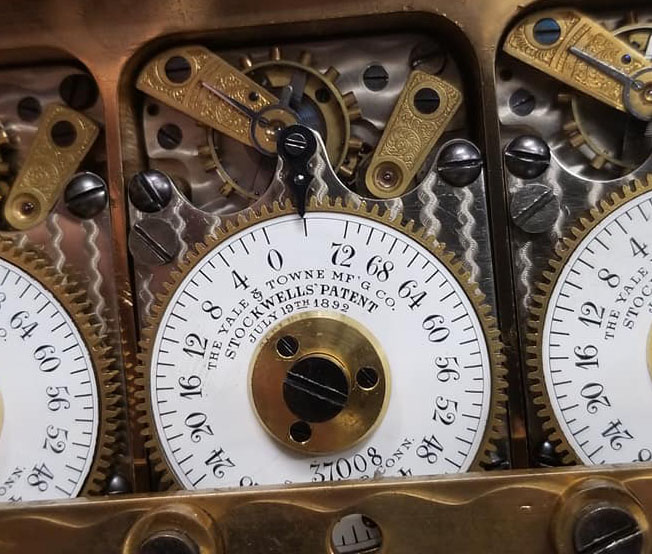
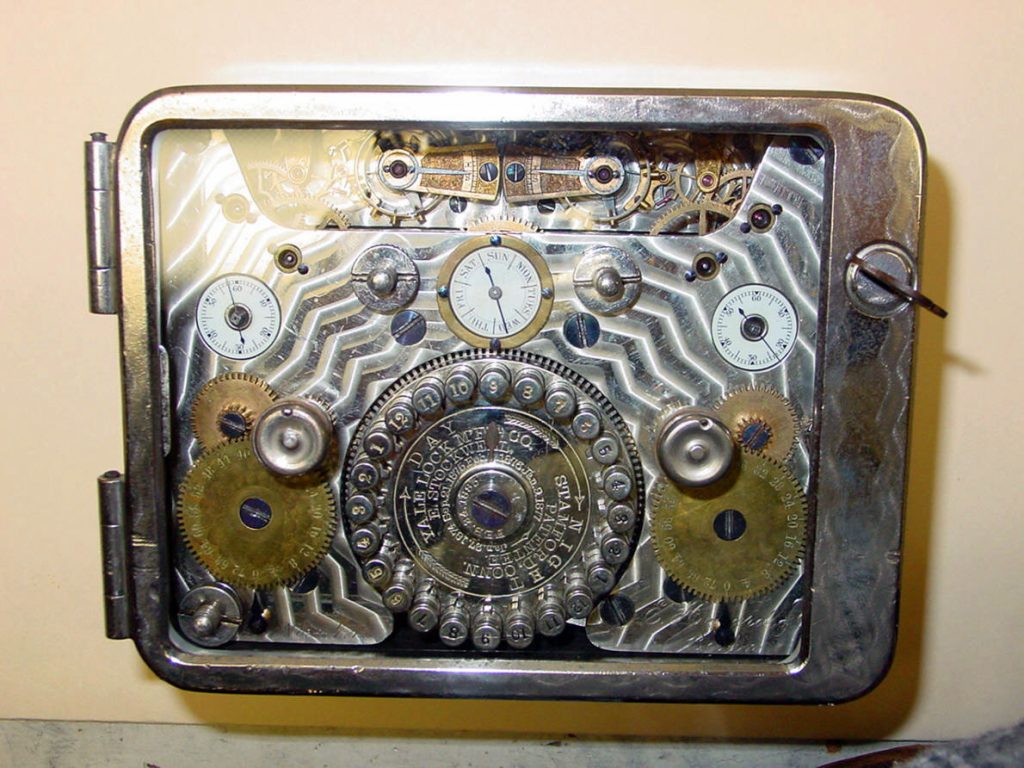
Time locks work as a further layer on top of this.
A stiff dial, a handle that won’t engage, bolts that won’t fully retract, or a lock that’s simply gone silent are all signs the internal mechanism has seized from dried grease, dust, or wear rather than being permanently broken.
Because these mechanisms were built to resist forced entry, they don’t respond well to force from a well-meaning owner either — this is where a professional safe cracking or lock service makes the difference between a working antique and a damaged one.